
StrikeFeed
Self-initiated. Designed, built and launched in seven days
Seven days
Designed, built and launched a working consumer product in 7 days, in public, for 5,000 designers who had never watched one go all the way out.
The business problem
I had mentored 5,000 designers who had never seen the unglamorous 80%.
Over a couple of years I mentored more than five thousand designers across various platforms, and the same request kept arriving: document your process, start to finish. The gap was never taste. It was that almost none of them had seen what happens between a nice-looking screen and a thing on the internet that strangers can use — the CMS schema, the deploy, the decision to use a worse tool because you already know it. Portfolios optimise for the artifact. Nobody publishes the boring 80%.
So I set a constraint: pick a real consumer premise, and take it from interviews to public launch in seven days, documenting every decision including the bad ones.
The premise itself came from interviewing the people around me. When a business drops the ball and will not make it right, the consumer’s only real leverage is public noise — and the review channels that exist are largely controlled by the business being reviewed. Some businesses have no review surface at all; the ones that do can bury a bad review under glowing ones. The hypothesis: a platform that broadcasts bad experiences applies enough public pressure that the business resolves them.
The reframe
The constraint was the curriculum.
A seven-day cap is not a stunt, it is a forcing function that makes every tradeoff visible and therefore teachable. Given a year, the interesting decisions disappear under polish. Given a week, you have to say out loud “I am using CraftCMS and PHP because I already know them and a JavaScript stack costs me two days I don’t have” — and that sentence, spoken by someone with no incentive to look clever, is the thing five thousand designers had never heard anyone say.
The work
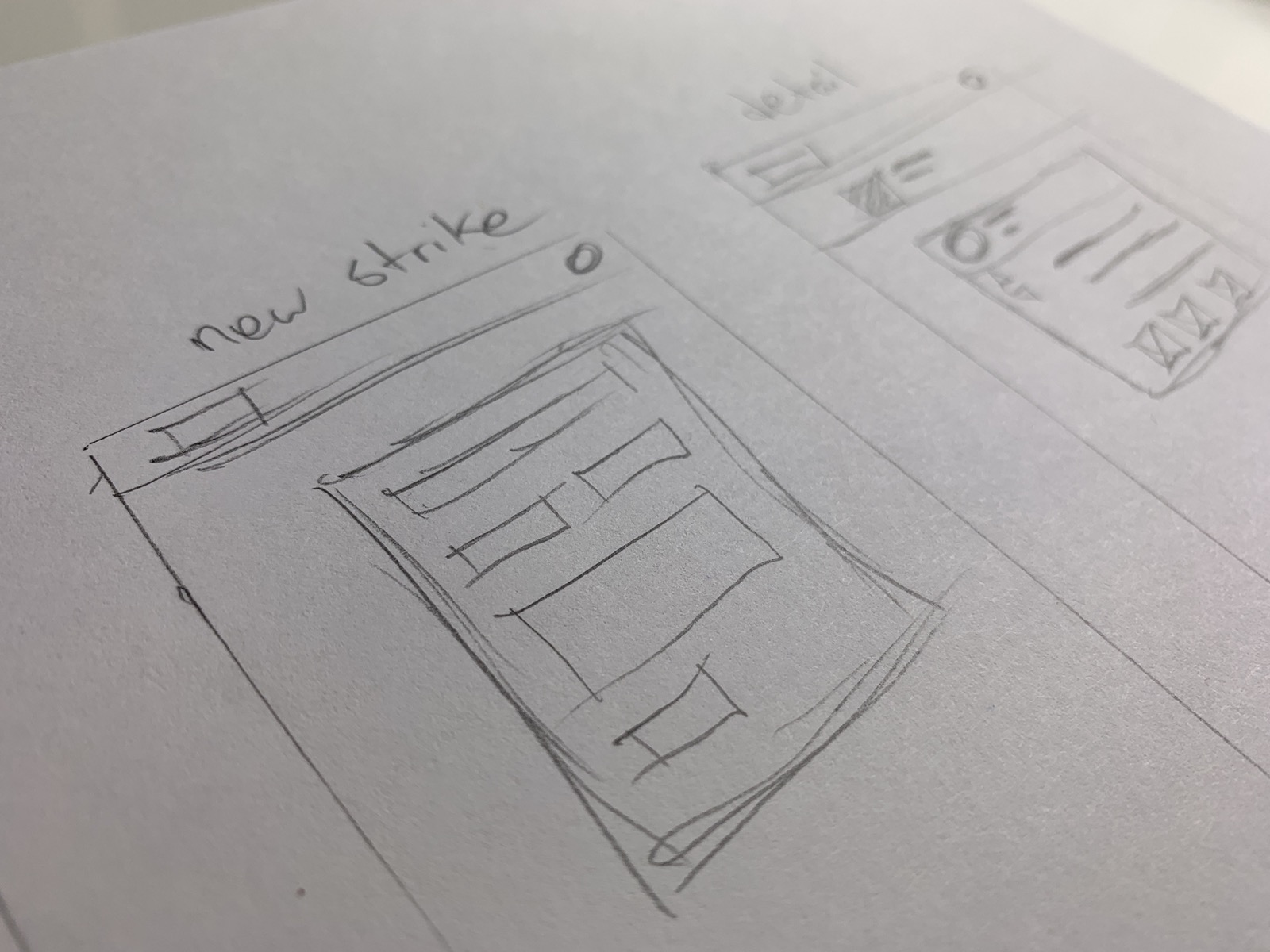
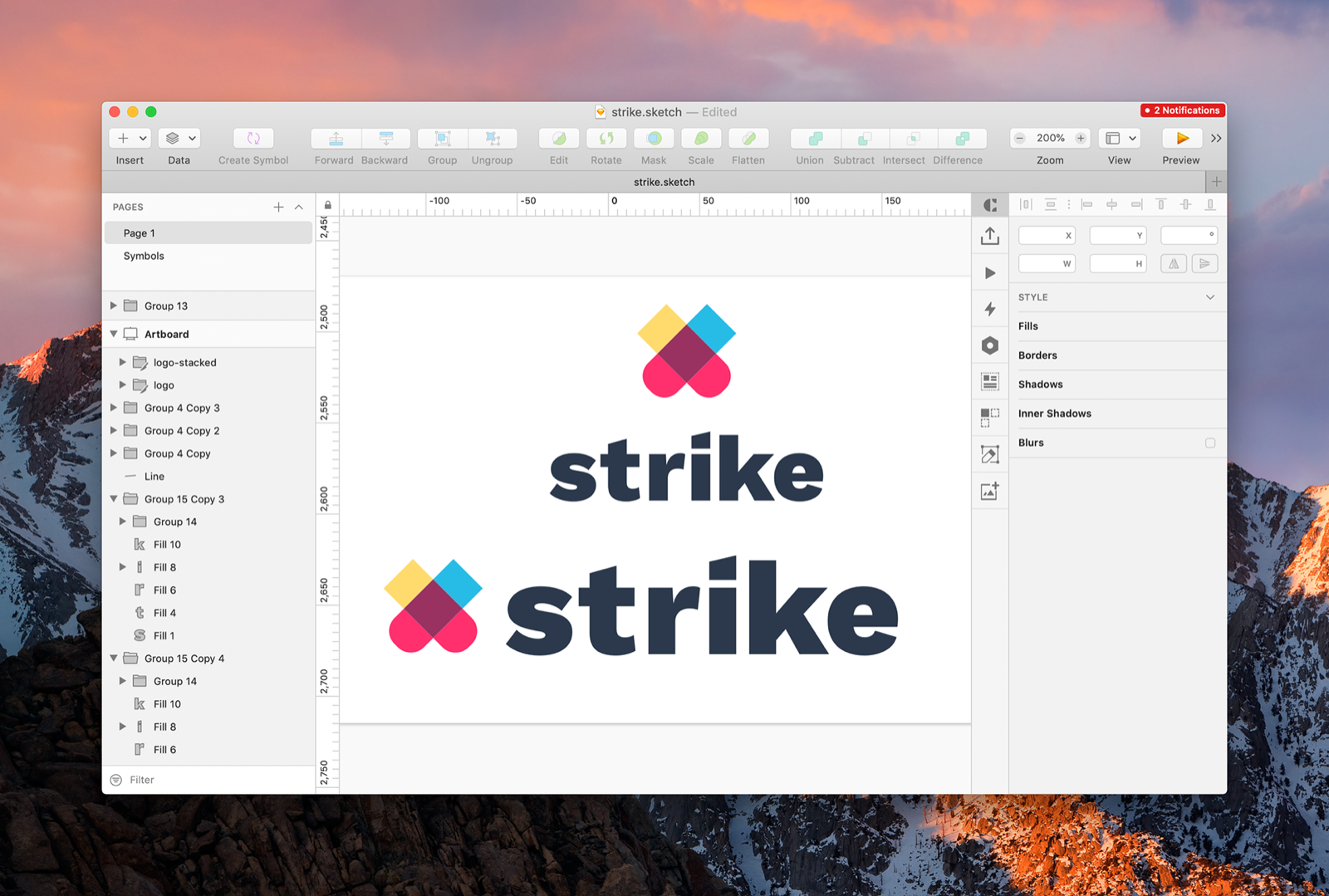
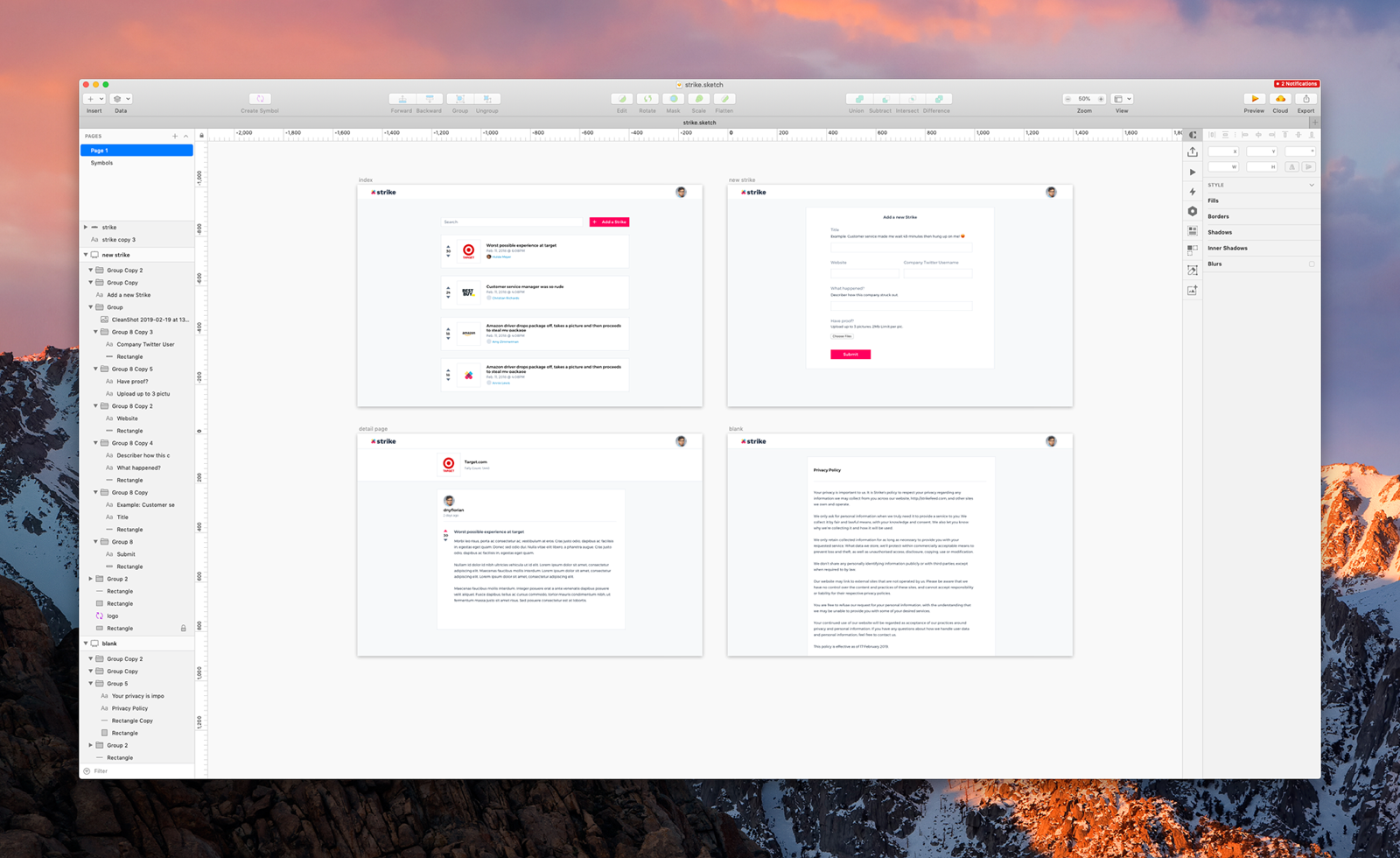
Sketch, brand, browser, CMS, server, launch — in that order.
Explorations that died
-
01 / 03
Two forms: complaint, then company
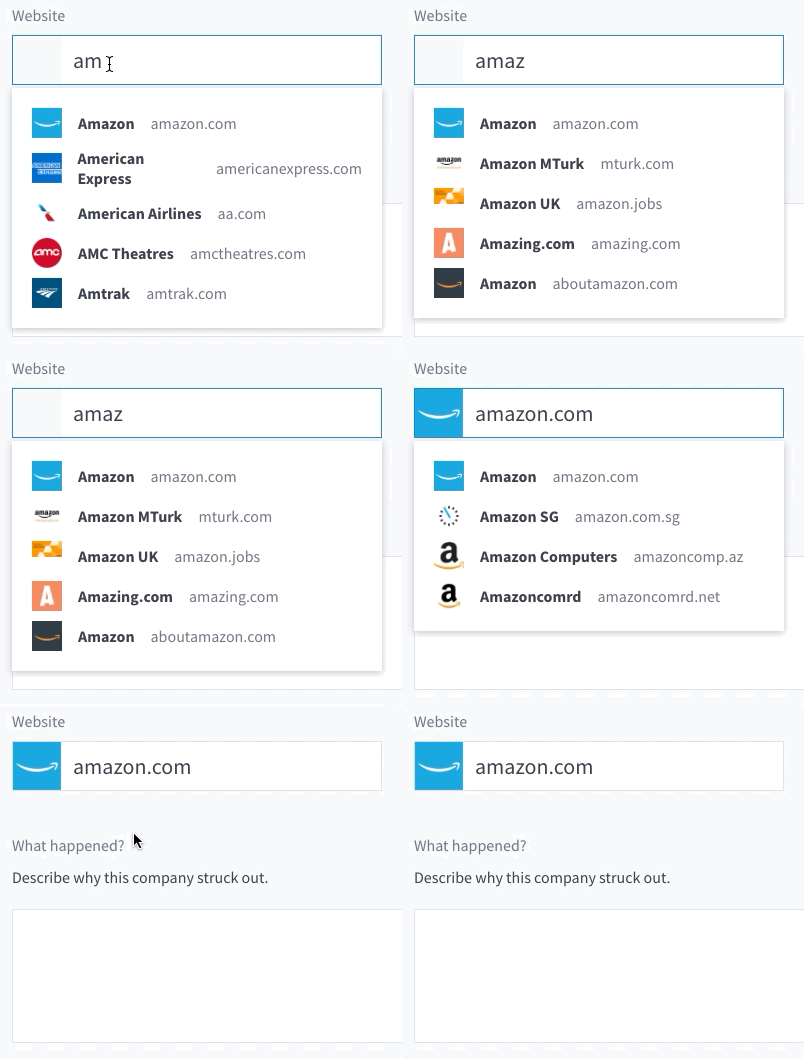
Users had to author a company profile before they could complain about it. Died on day four when the Clearbit logo API let a single URL field do both jobs.
-
02 / 03
Threaded discussion per complaint
It turned a pressure mechanism into a forum, and moderation for a forum is not a seven-day feature at any level of ambition.
-
03 / 03
Business response and resolution
The actual point of the product — and there was no honest way to build the business half in the days remaining. I shipped without it and said so in the launch post.
Tradeoffs
What got cut, and why.
- The entire business-facing side. The hypothesis only tests if the business being complained about can respond, and day seven arrived with only the consumer half built. Correct call for the deadline; also the reason the core loop never closed. Both of those things are true.
- Moderation. A report button and me. No queue, no policy engine, no appeals. Perfectly fine at zero users, indefensible at any scale, and written into the launch post rather than quietly omitted.
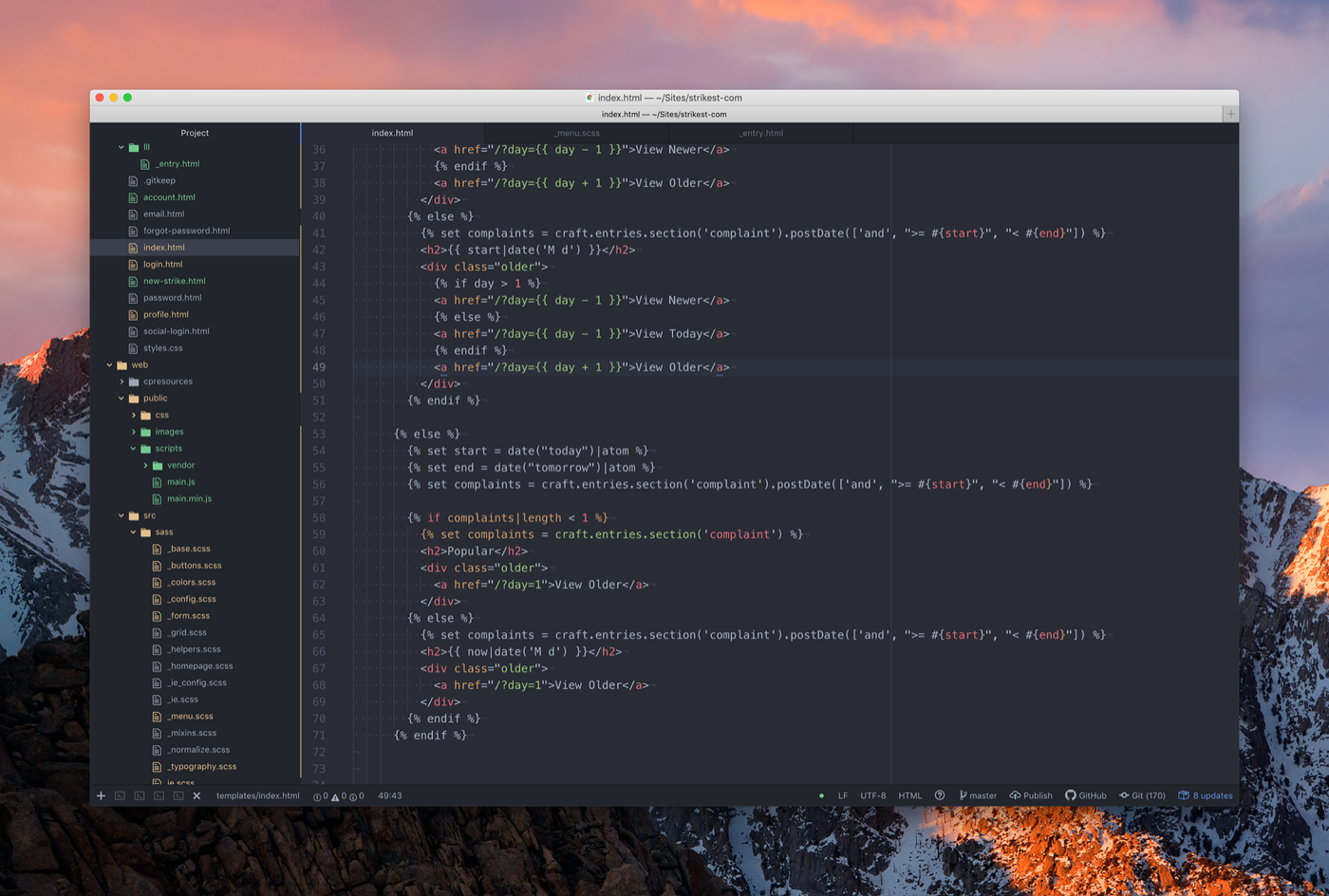
- The better technology choice. CraftCMS, PHP, MySQL and Laravel Forge over a JavaScript stack, purely on my own familiarity — roughly two days saved. A worse long-term choice and the correct seven-day choice, and the distinction between those two is most of what I was trying to teach.
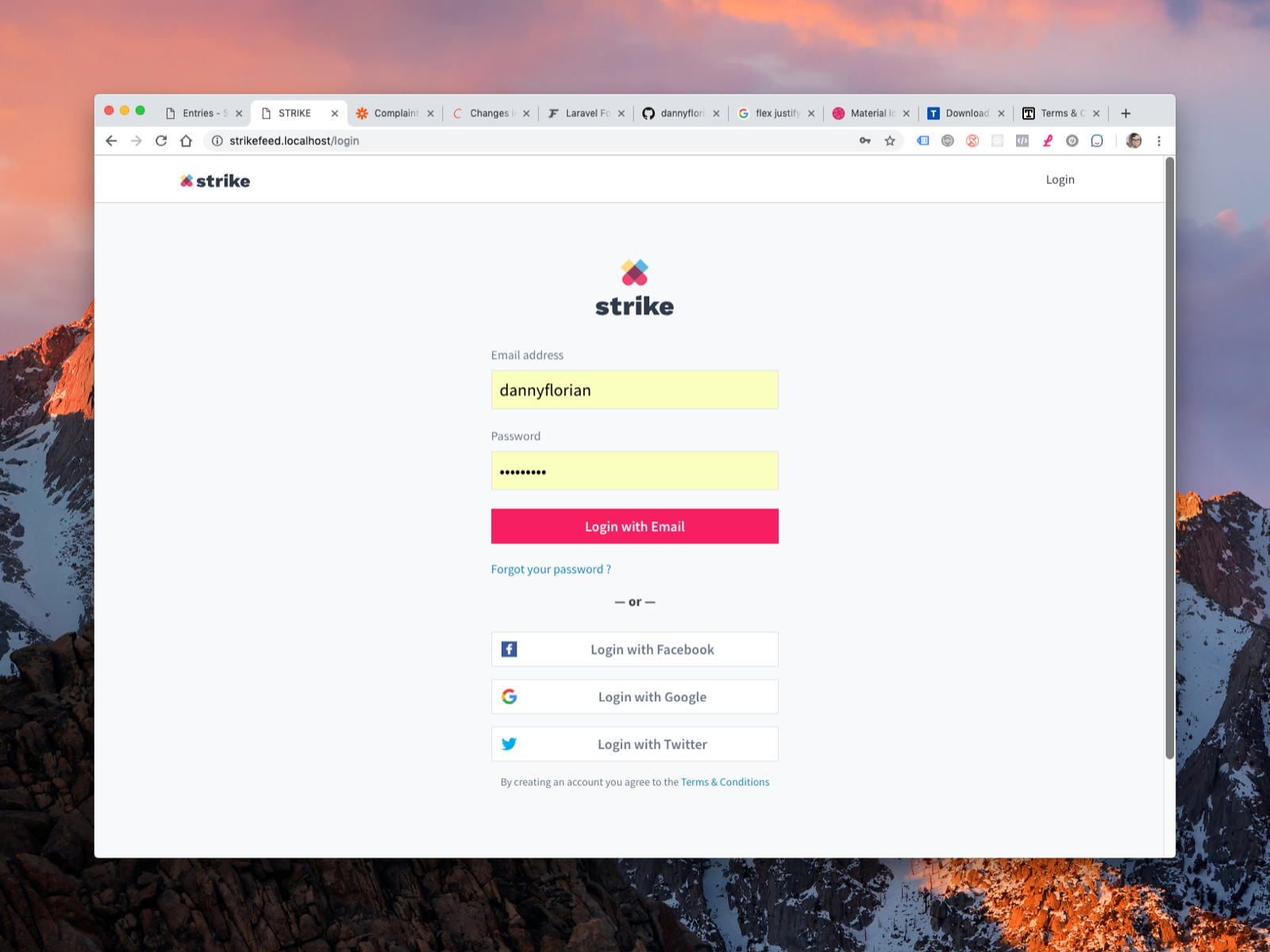
- Comping every screen. Login and sign-up were designed directly in the browser. On a project made almost entirely of existing components, a static comp of a form is a day spent drawing something the CSS already knows how to do.
Impact
Interviews to public launch in 168 hours.
-
7 days
First commit to a public, working launch.
Measured: 168 hours elapsed, documented daily — research and sketches, brand, UI, CMS build, server and deploy, feed logic, launch.
-
~5,000
Designers reached by the process write-up.
Measured: mentee audience across mentoring platforms at time of publication. It remains the most-requested thing I have published.
-
100%
Of the stack documented publicly, including the regrets.
Measured: every tool and service listed by name — CraftCMS, Laravel Forge, Ubuntu, Nginx, MySQL, Gulp, SASS, Mailgun, Clearbit, Zapier — with the reasoning, including choices I would now make differently.
Reflection
The product’s hypothesis was never really tested, because public pressure only works if the business can respond and I ran out of week before building that half. As a teaching artifact it did exactly what it was meant to: every question I got afterwards was about deploys and CMS schemas, not about the logo. Next time I would cap the scope at the loop rather than at the calendar.