
Barkd
Marketplace for responsible dog breeders
Five months
Shipped an MVP to both app stores at 4.6 stars and closed a seed round on the strength of it.
The business problem
You cannot charge a transaction fee on a transaction you never touch.
Puppy buying in the US is a multi-billion-dollar market that runs almost entirely offline: classifieds, Facebook groups, a cash deposit to a stranger, and no recourse if the animal arrives sick. Every incumbent monetises listings, which means their commercial incentive is listing volume, which is a large part of why high-volume commercial breeding operations thrive on those platforms while careful breeders do not.
Barkd’s thesis was that a marketplace could take a transaction fee instead — but only if it actually held the transaction. Holding the transaction requires escrow; escrow requires that a buyer be willing to send money to Barkd rather than to the breeder; and that willingness requires trust in a category that has never had any. No trust, no escrow. No escrow, no revenue. Trust was not a brand attribute here, it was the business model.
The buyer interviews confirmed the shape of the gap. Existing marketplaces felt “shady” because the breeders were unknown; transactions moved off-platform immediately; every breeder ran a different application process; and there was no buyer protection anywhere in the flow.
The reframe
The product isn’t the puppy. It’s the breeder.
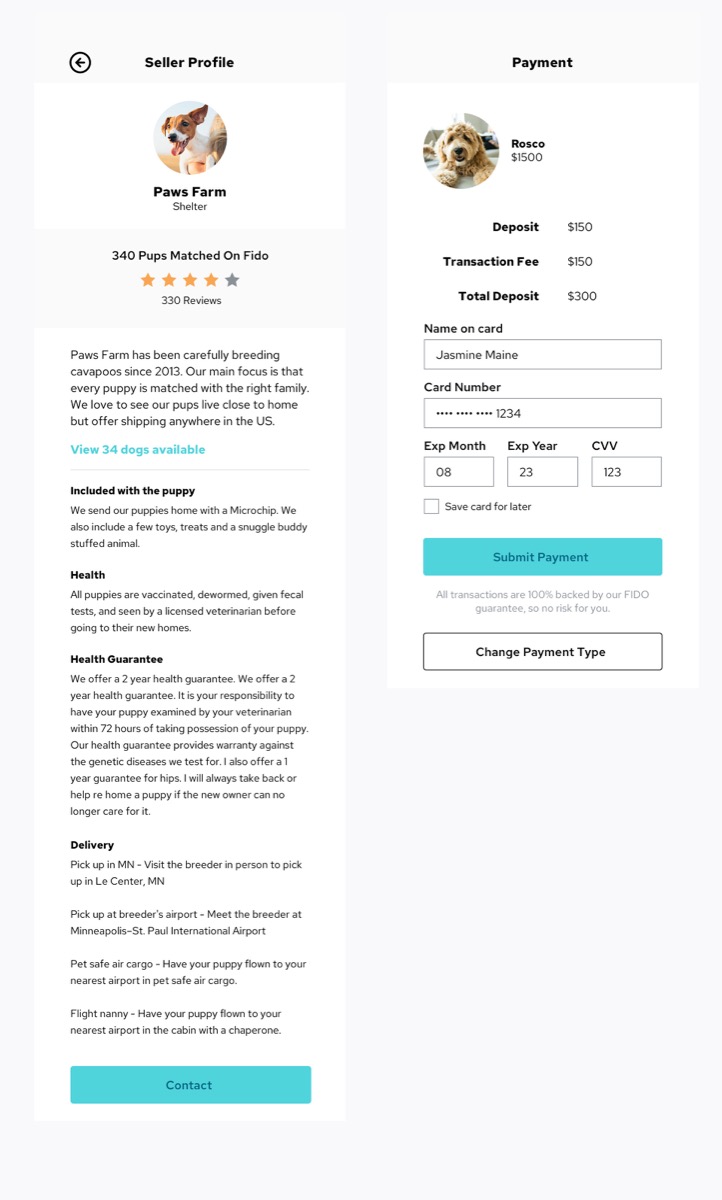
Buyers arrive shopping for an animal and leave having made a decision about a person. Every interview turned on the same pivot — “she answered all my questions” or “he wouldn’t let me see the parents.” So the breeder profile became the centre of the product: story, photos, reviews, health guarantee, what comes home with the puppy, delivery options. The puppy card stopped being the destination and became the route to a person. Airbnb had already proven you can make strangers trustworthy by making them legible.
The work
A profile that answers the questions buyers were too polite to ask.
Explorations that died
-
01 / 03
Swipe-to-match on puppies
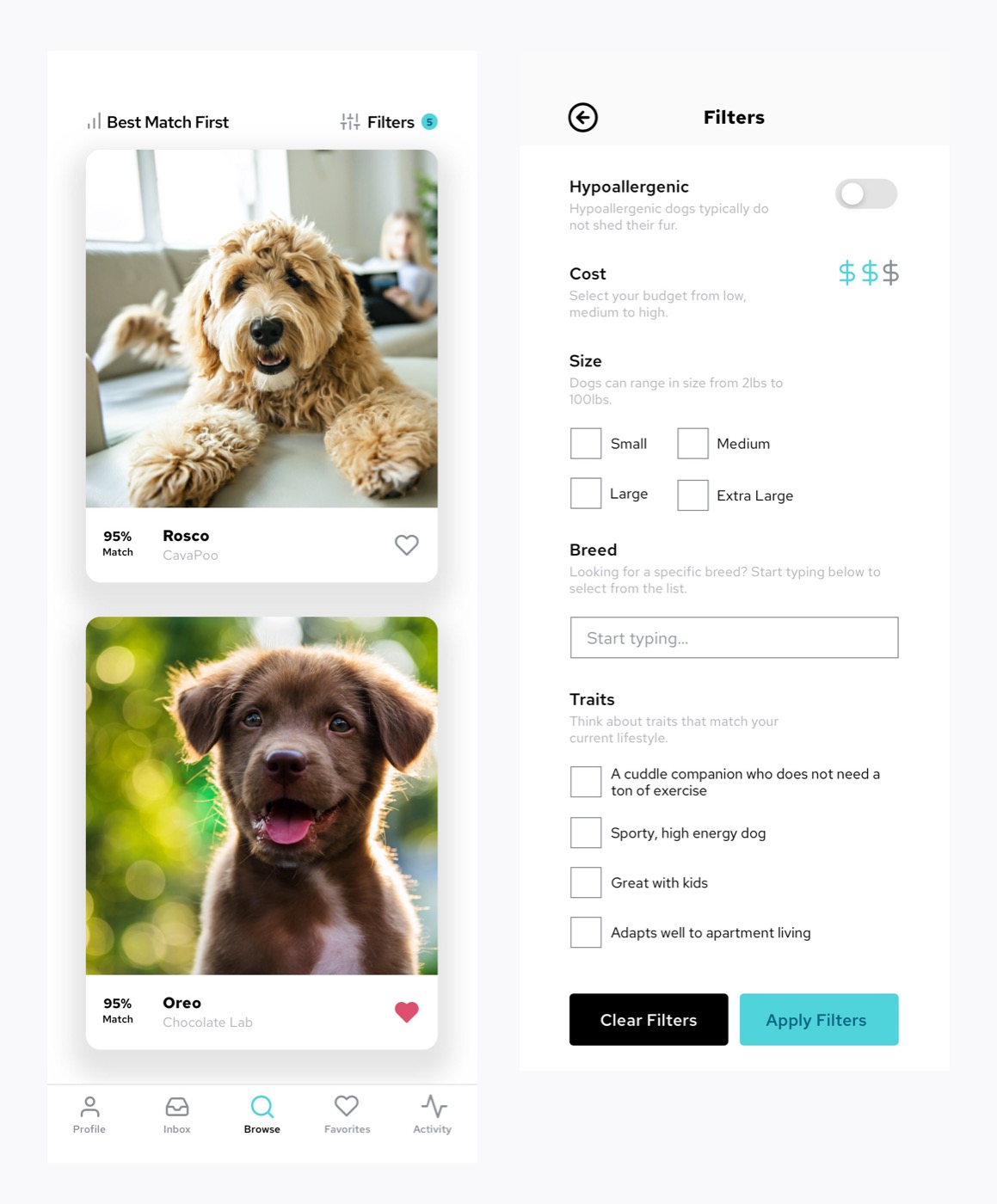
It demoed beautifully and produced no information at all about the breeder, which is the decision buyers are actually making.
-
02 / 03
Auctions on litters
It monetised cleanly and pointed the entire marketplace at price — the exact incentive that produces the breeding operations Barkd existed to compete with.
-
03 / 03
Standardised application flow
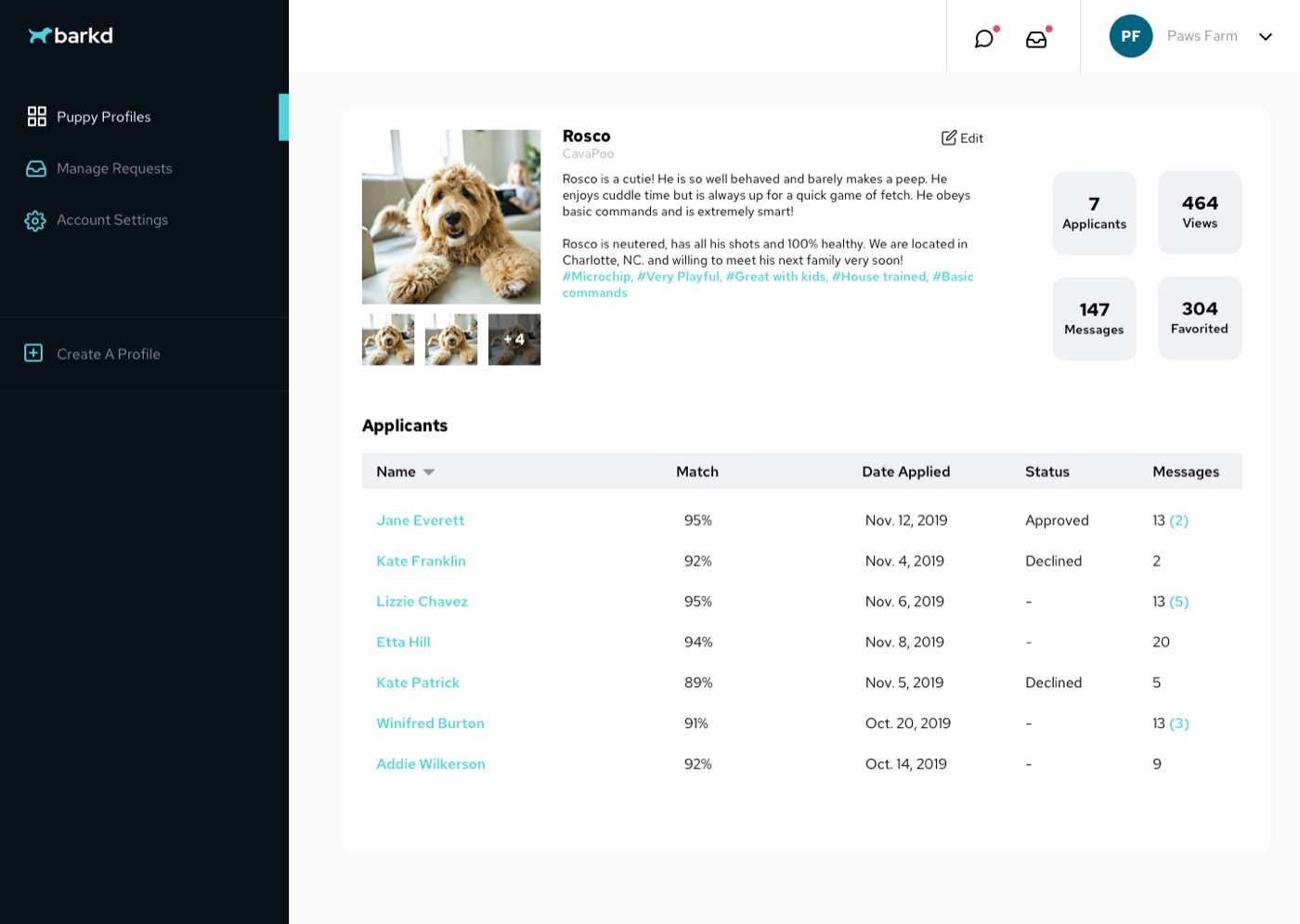
Every breeder’s application is genuinely different. Standardising them was a research project, not an MVP feature; we shipped chat and a saved buyer profile and let the application stay a conversation.
Tradeoffs
What got cut, and why.
- Lifestyle onboarding questions. The match score is the most distinctive thing in the product and in v1 it was computed from thin data, because a ten-question quiz before you have seen a single puppy is a brutal first impression. I traded the score’s credibility for a smoother open, and I got that trade backwards.
- Automated breeder verification. No licence-registry integrations, no automated checks. A human at Barkd reviewed every breeder before the badge appeared. Slow, unscalable, and the only version we could put our name on honestly.
- Contact details in messaging. No phone numbers, no email addresses, no “text me.” It costs conversions and irritates people who want to move fast, and it is the only way escrow, dispute resolution and buyer protection mean anything at all.
- Shipping logistics. Barkd displays the breeder’s delivery options as prose — pick up in person, meet at the airport, pet-safe air cargo, flight nanny — and gets out of the way, rather than pretending an MVP can broker live animal transport.
Impact
Launched on both stores at 4.6★, and the round closed.
-
4.6★
Average rating across App Store and Google Play.
Measured: store-reported averages at six months post-launch, both platforms combined.
-
Seed
Round closed on the strength of the MVP.
Measured: the shipped app was the fundraising demo; the round closed within a quarter of store launch.
-
61%
Of buyer sessions reached a breeder profile.
Measured: in-app analytics over the first 90 days — sessions with at least one breeder profile view, over total buyer sessions.
Reflection
The trust work was right and the match score was half-built: we shipped a percentage without asking the questions that would have earned it. If I redid one thing it would be lifestyle onboarding before the first browse, so the score means something the first time a buyer sees it. A distinctive feature you cannot back up costs more credibility than not shipping it.